Serengeti National Park in Tanzania is home to Big Cats, especially the ones you’ve grown up watching on Animal Planet. The fastest animals in Africa are also among the fastest in the world, and so are the ones known for agility. Two of the famous Big Cats are Leopard and Cheetah.
To someone who has never spent time around Big Cats, cheetahs and leopards can look surprisingly familiar. Both are hunters and are widely found in African regions, especially Tanzania. However, these felines differ in appearance, behavior, lifestyle, and hunting style.
Before you ask, “Is that a leopard or a cheetah?” this guide can help. We explore the key differences in leopards vs. cheetahs to help you tell the two majestic predators apart.
Leopard vs Cheetah at a Glance
Before we delve further, here’s a glance at leopard vs. cheetah:
| Feature | Leopard (Panthera pardus) | Cheetah (Acinonyx jubatus) |
|---|---|---|
| Coat Pattern | Rose-like markings (rosettes) without center spots | Solid, round black spots |
| Facial Markings | No tear stripes; broad head | Black “tear tracks” running from eye to mouth |
| Body Shape | Muscular, stocky, and low-slung build | Slender, aerodynamic build with a deep chest |
| Claws | Fully retractable (sharp for climbing and gripping) | Semi-retractable (acting like athletic cleats for speed) |
| Hunting Strategy | Ambush predator; relies on stealth, power, and camouflage | Pursuit predator; relies on extreme acceleration and speed |
| Climbing Ability | Excellent climber; frequently drags prey up trees | Poor climber; stays mostly on the ground |
| Activity Time | Primarily nocturnal (hunts at night) | Diurnal (hunts during the day to avoid larger predators) |
| Top Speed | 35–40 mph (56–64 km/h) | 60–70 mph (96–112 km/h) in short bursts |
| Sound / Vocalization | Roars, growls, and heavy raspy grunts | Purrs, chirps, and high-pitched meows (cannot roar) |
Size & Build: Power vs. Speed
Let’s start with the size and build of both the leopard and the cheetah. Here’s how their own size and build have contributed to their survival and predatory instincts:
Leopard Size & Physical Build
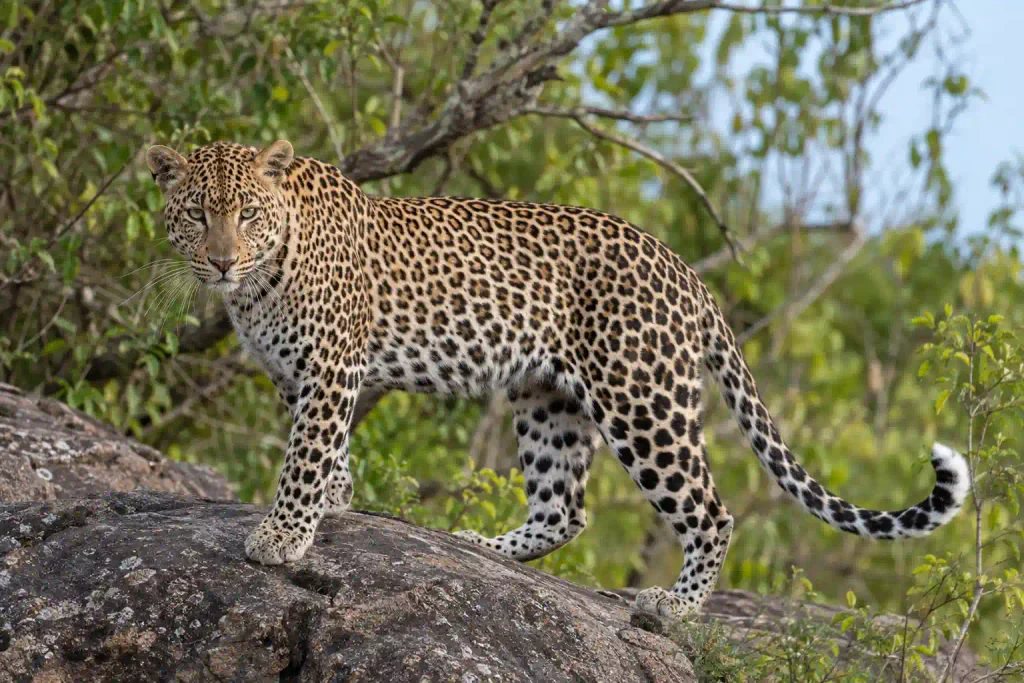
Leopards are stocky and muscular, predominantly built for strength and agility. Their shorter, powerful legs let them climb trees quickly while carrying heavy prey. Male African leopards generally weigh between 50 and 90 kg (110 to 200 lb), while female African leopards average 35 to 40 kg (77 to 88 lb).
Cheetah Size & Physical Build
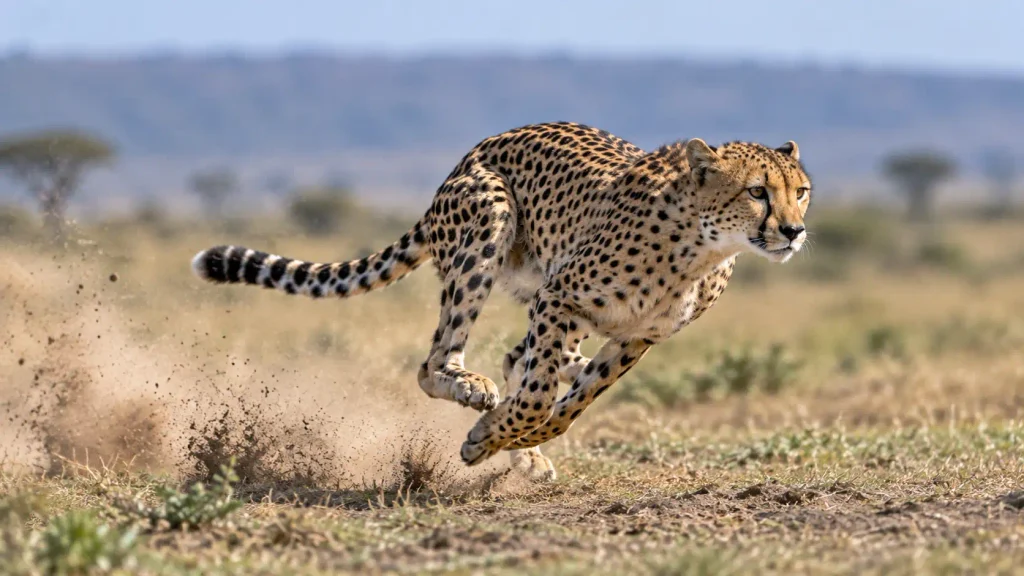
Cheetahs are lightweight, slender, and built for speed. They have streamlined bodies, small heads, thin chests, and long legs for running across vast savanna grasslands. Adult male African cheetahs typically weigh between 46 and 159 pounds (21 to 72 kg), while adult females generally weigh between 47 and 132 pounds (21 to 60 kg).

Speed Compared: Why the Cheetah Wins the Sprint
Next is the second criterion of comparison: leopard vs cheetah. Here’s what is notable about the two Big Cats:
How Fast Is a Cheetah?
When it comes to raw speed, nothing on land can match a cheetah. Built like a living racing car by nature, cheetahs are perfect examples of speed over strength. On an open plain, a cheetah’s speed can reach upto 113 km/h (70 mph).
How Fast Is a Leopard?
Fastest is not something for a leopard. Instead, known for their agility and stealth, leopards are expert hunters, capable of taking down prey much larger than themselves. African leopards are incredibly versatile and occupy a wide range of habitats, from savannas to forests and even semi-desert areas.

Why Cheetahs Are Built for Speed (and Leopards Aren’t)
Both cheetahs and leopards have to survive in the harsh African wild. Cheetahs naturally inhabit savanna grasslands, where herbivores like gazelles are very fast. To survive in the open fields, cheetahs need to be fast enough to match or have greater speed than their prey.
Whereas leopards naturally inhabit places with more acacia trees and dense grasslands than vast open fields. To compete with other predators like lions and hyenas, leopards must be highly agile to stalk prey, hunt it, and climb a tree to reach its food. Acute night vision helps leopards hunt at night against bigger, stronger predators, and agility becomes their weapon.
Hunting Styles: The Ambush vs. the Sprint
Leopards and cheetahs don’t hunt alike. To match their environmental conditions and build, they both hunt uniquely:
How Leopards Hunt
Leopards rely on quiet movement rather than long chases. They get as close as 32 feet to their target before launching a fast pounce. Leopards rely on quiet movement rather than long chases. They get as close as 32 feet to their target before launching a fast pounce. They are skilled climbers and can ambush their prey even from tree branches.
How Cheetahs Hunt
Cheetahs hunt during the day (mostly at dawn and dusk) to avoid competing with nocturnal predators like lions and leopards. Their long tails act as rudders, while rigid paw pads and semi-retractable claws grip the ground like cleats to help them follow prey that zigzags. The spotted coats enable them to hide in tall grasses and bushes and creep near their prey, and if it gets alert, now’s time to run and hunt.
Where to See Leopards in Tanzania
As you go for a wildlife safari in Tanzania, you’ll know not every animal is present in front of you. If you know where to look, you may be lucky enough to see an animal resting or predator-prey hunting scenes. Here’s where you might spot more leopards than at other destinations in Tanzania:
Central Serengeti National Park
High prey density and iconic acacia trees provide ideal spots for resting and hunting. Around 75% of travelers can spot leopards here.
Ruaha National Park
Rugged riverine bushland in southern Tanzania known for exclusive, uncrowded viewings. Guides track individual resident cats closely, though bush thickness can make sightings patchy.
Lake Manyara National Park
This safari destination has dense groundwater forests and fig trees, where elusive leopards prefer to hide. Good daytime cover, though patience and early morning drives are required.
Where to See Cheetahs in Tanzania
Unlike leopards, cheetahs stay in prides like lions. This helps them fight large predators and hunt together. On a Tanzania safari, you can spot cheetahs in:
Southern Serengeti & Ndutu
Focus on the open grasslands surrounding Lake Ndutu, the marsh edges, and the small acacia clusters where mothers frequently hide young cubs.
Central & Eastern Serengeti Plains
While the south is seasonal, the Central (Seronera) and Eastern Plains (Namiri) offer exceptional, highly reliable cheetah viewing year-round, peaking during the dry season from June to October.
Best Time of Day (and Year) to See Each
Tanzania safaris require a specific time of day and year to spot big cats in action. It’s a common misconception that you can spot cheetahs or leopards anytime. Don’t fall for this. To actually get a good glimpse of both cheetahs and leopards, here’s what timing you need to know:
Best Time of Day
The best time of day to spot a leopard is during dawn (6:00 AM to 8:30 AM) and late afternoon into dusk (4:30 PM to 6:30 PM), when these elusive predators are most active and moving through their territory.
The best time of day to spot a cheetah is early morning (6:00–9:00 AM) and late afternoon (4:00–6:00 PM), when temperatures are cooler, and the cats are most active.
Best Time of Year
The best time of year to spot leopards, cheetahs, and other wildlife is during the dry season (June to October). The long dry season leaves vegetation scarce, making it easier to spot wildlife and increasing your chances of witnessing predator-prey action live.
Which Will You See More Often? Honest Odds on Safari
If you ask for cheetah vs. leopard in terms of sightings, you are more likely to witness cheetahs in open fields. You’ll see them more often moving or resting in open grasslands, and they hunt in broad daylight, making them easier to spot during predator-prey action. Look for solid black dots and black “tear lines” running from the eyes down to the mouth.
Leopards, on the other hand, are shy, solitary, and spend most of their daylight hours high up in acacia or sausage trees.
Plan a Safari to See Both: Our Recommendation
At Proud African Safaris, we recommend our tourists take Private Custom Safaris to spot both leopards and cheetahs. You can go on unlimited game drives with no mileage restrictions to spot cheetahs both resting with pride and hunting. Alongside, you can also go on safaris specially designed to track and spot leopards in trees from a safe distance.
Ready to Plan Your Tanzania Safari?
Visit our website at Proud African Safaris to Plan Your Trip.
Call us at +1 617-513-7192 or email us at steve@proudafricansafaris.com for luxury Tanzania safaris tailored to your travel preferences.
See you soon!
Can a cheetah beat a Leopard in a fight?
Yes, in a direct physical fight, leopards can easily defeat a cheetah because they are heavier, more muscular, and stronger. However, a cheetah will never openly challenge a leopard because it knows the consequences. Leopards also generally do not threaten a cheetah because it can cause a waste of time and energy by being unable to match speed in a possible chase.
What's the best national park in Tanzania to see both leopards and cheetahs?
The Serengeti National Park in Tanzania is the best safari destination to spot both leopards and cheetahs.
What time of day are cheetahs most active?
Unlike most big cats that hunt at night, cheetahs are diurnal (active during the day) and specifically crepuscular, meaning their activity peaks at dawn and dusk.