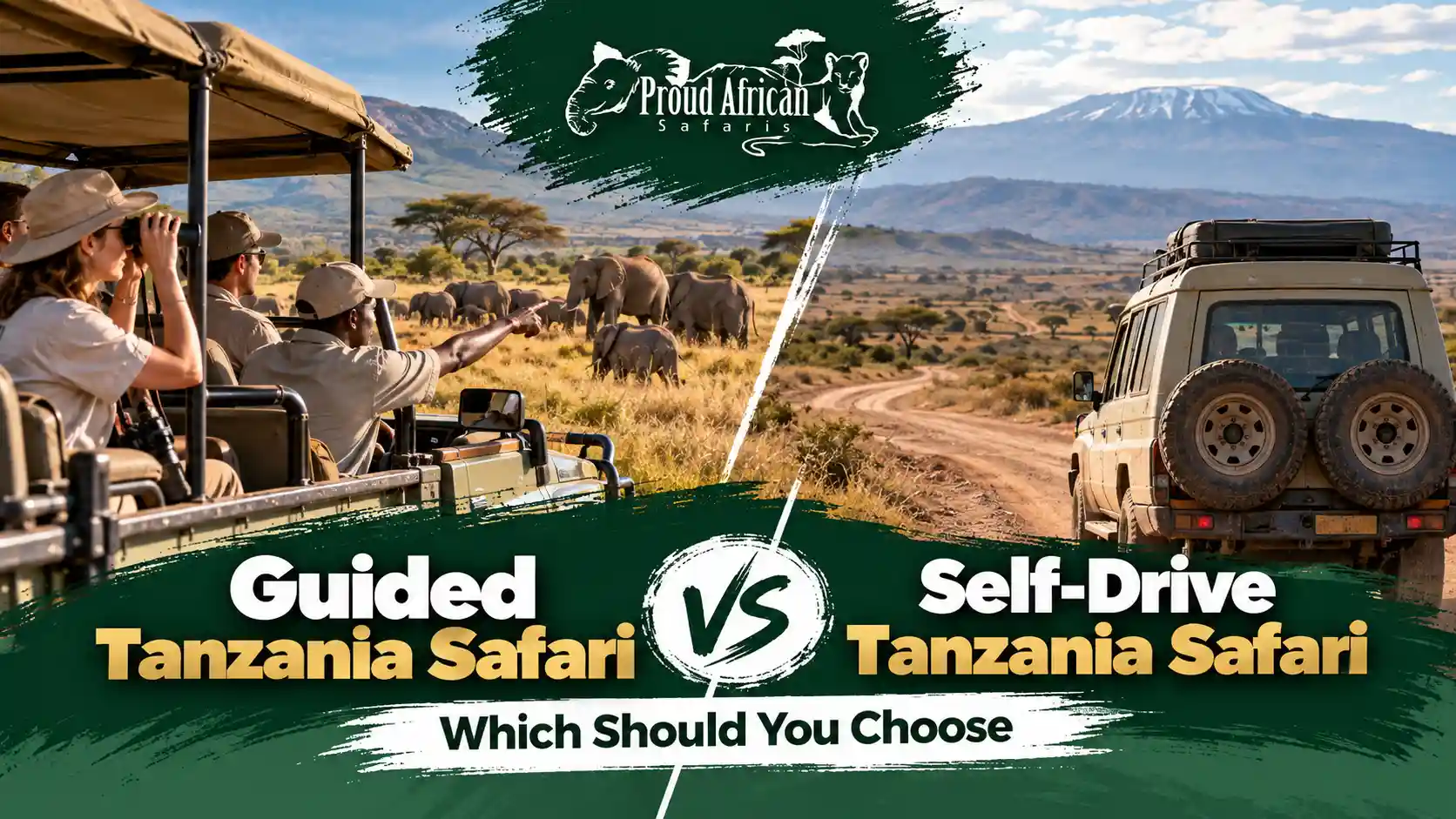
A guided and a self-drive safari are both possible in Tanzania, depending on the traveler’s preferences and qualifications for a particular safari. A guided safari is recommended for travelers who are new to such tours and prefer to have assistance in wildlife viewing and dealing with park issues. A self-drive safari Tanzania is recommended for travelers who have experience with four-wheel drives and time to organize their trip.
Key Facts: Guided vs Self-Drive at a Glance
| Feature | Guided Tanzania Safari | Self-Drive Safari |
|---|---|---|
| Who drives? | Professional safari driver-guide | You or a member of your group |
| Vehicle | Safari-ready 4×4 arranged by the operator | Rental 4×4 arranged independently |
| Navigation | Guide handles routing and park tracks | You manage maps, navigation, and route planning |
| Wildlife spotting | Guide shares local knowledge and helps locate animals | You rely on observation, research, and your own experience |
| Park and crater rules | Operator and guide help manage requirements | You must research and comply with all requirements |
| Problems or emergencies | Guide and operator can help coordinate assistance | You must contact rental support, park staff, or emergency services |
| Flexibility | Private safaris allow a personalized pace within park rules | You choose your route and schedule within applicable rules |
| Typical suitability | First-time visitors, families, and wildlife-focused tourists | Experienced 4×4 drivers who enjoy independent travel |
Neither is superior by default to all individuals. It ultimately boils down to your preference whether you want to focus more on the wildlife and the safari adventure itself, or take control of driving and navigating on your own.
What Is a Guided Tanzania Safari?
Guided safaris are those organized professionally where a professional driver-guide drives for you, navigates and spots the wildlife as well. With this safari, your safari operator will organize the route you want to take, where you are going to stay at and when to get into the park so that the number of decisions you make during the safari is minimized.
In Tanzania where the distances covered are great, roads are different and spotting the wildlife is dependent on local knowledge, having a guide may come in handy as he will also teach you about the animal behaviors, identify animals you might have missed and adjust your route depending on the situation.
Private guided safari can allow you to have control over your schedule without having to drive yourself.
What Is a Self-Drive Safari in Tanzania?
Self-drive safari in Tanzania requires hiring of the proper vehicle and planning the entire journey by yourself. The choice of where to make stops, how much time to spend at a particular spot, and where to stay overnight rests solely with you.
The Tanzanian National Parks authority assures us that self-driving is feasible in many parks with the right car; however, one needs to be aware of the requirements for each particular park.
What You Need to Self-Drive in Tanzania?
Before looking for a rental option, check these essentials:
➠ Driving license: Carry an officially acceptable license that meets Tanzanian driving requirements. A driver’s license in addition to an International Driver’s Permit might be beneficial.
➠ Drive on the left: Tanzania is known to drive on the left side of the road, something that might require adaptation if one is used to driving on the right.
➠ Age limit, deposit: Rental age limit, driving experience, deposits, excesses, and other requirements differ from one rental company to another. Get them officially in writing.
➠ Appropriate 4×4: It is necessary to have a proper 4×4 vehicle, which is vital in certain safari routes, especially when it rains.
➠ Breakdown cover and insurance: Learn what the policy covers and whether recovery is part of it. Learn how to contact the service in case the car breaks down.
The US State Department emphasizes the poor condition of roads, left-hand driving system, and need for a legal license.
Where Self-Drive Is Allowed and Where It Isn’t?
It is possible to self-drive within the national parks like Serengeti, Tarangire, and Lake Manyara based on existing park rules and guidelines. TANAPA recommends using only established tracks, respecting speed limits, and avoiding off-road driving except where authorized.
The Ngorongoro Crater deserves special mention. While there are sources for travel information suggesting that it is possible for independent travelers to arrange their entry into the crater, other sources indicate that there might be some need for an official or licensed guide unless one is specifically authorized. There is an official booking website run by the Ngorongoro Conservation Area Authority. In case of any discrepancies between published guidelines, it is better to verify the current guideline with the Ngorongoro Conservation Area Authority.
What a Self-Drive Day Really Involves
A typical Safari Day entails much more than just looking at the map. One needs to take into consideration fuel requirements, time taken to get somewhere, food and water arrangements, gate times, and slow, tough road conditions. Restrictions within the park may prevent you from driving at night, going off-road, and leaving the car at will.
As per TANAPA’s advice on visiting the Serengeti, park visits are subject to opening times and wildlife protection guidelines. Base your day on the requirements and not your own schedule.
Guided vs Self-Drive: How They Compare
Finding Wildlife
One of the main strengths of guided safaris is that of a local guide’s intimate knowledge of the area. Guides will be able to identify tracks, understand animal behavior, and discuss sightings with other guides. This can let you to see specific animals that you may drive right past.
The self-drive option allows you to discover animals yourself, which is great satisfaction, but you have to learn to spot the animals yourself.
Guided safaris reduce the pressure of having to plan your own route as your guide will have the full itinerary of where you are going and how to reach that place.
In a self-drive, all the navigation becomes your responsibility along with estimating how long it might take to reach the destination taking into consideration that the road conditions might not be favorable during rainy seasons.
Safety and Emergencies
A guide or experienced driver can help to coordinate any support in case there is some trouble with the car or if something changes in your plan. Independent drivers should be aware of the procedure of breaking down and have contacts for park employees.
Read the latest US State Department Tanzania Travel Advisory before traveling, even if you are not a US citizen. It primarily covers road safety, security conditions, health and various other travel risks.
Park Rules, Permits, and Crater Access
A guided tour operator usually handles the park logistics and permits as part of the arrangement. For self-drivers, the onus is on them to check their requirements, which may include vehicle eligibility, entry into the park, access to accommodation and also to other craters.
Never assume that the rules are uniform for all parks and that making a car hire booking automatically means getting an entry permit to the various safari parks in Tanzania.
Flexibility and Pace
Self-driving provides freedom of route planning subject to park guidelines and limitations. Another flexible mode of travel is a privately guided safari as you are able to negotiate with your guide about your requirements for the day and spend more time at appropriate stops.
For most travelers, a privately guided safari is the most ideal travel choice.
Cost: What Actually Differs?
There is no universal rule that indicates that self-drive is cheaper. Compare the complete cost of every option, not just the rental fee.
Self-drive cost may include:
➧ Vehicle rental, insurance, and deposit.
➧ Petrol, parking charges for vehicle, and admission fees.
➧ Accommodation, food, and any camping gear.
➧ Permits, navigation aids, and breakdown services.
➧ Additional guide services if needed.
Guided safari costs may include:
➧ A dedicated game viewing safari vehicle and driver guide.
➧ Fuel and transfers arranged.
➧ Park or conservation entry fees based on quotation.
➧ Accommodation and food according to itinerary.
➧ Route planning and logistical arrangement of safari.
Compare every written, itemized quotes with similar travel dates, accommodation standard and park visits.
Effort After a 17-Hour Flight
Adjusting to the time difference and new roads after an extensive international trip can be exhausting, especially for those not used to left side driving.
Arriving at Arusha, spending one night there and then embarking on the safari the next day would be more advisable. You can explore Proud African Safaris’ private custom safari itineraries to see how a more relaxed start can fit into your trip.
Who Should Choose Self-Drive?
You might find self-drive suitable for you if you:
- Have extensive 4×4 and left-hand driving experience.
- Like planning your own itinerary and solving problems on your own.
- Have sufficient time to leisurely undertake your journey.
- Do not mind handling your park regulations, permits, and emergencies.
- Would rather explore on your own than have a guide explain the wildlife to you.
However, it is especially crucial that you assess your own experience realistically. Driving around a city is quite different from maneuvering the remote safari tracks.
Who Should Choose a Guided Safari?
Guided safaris are always the best option when you are visiting Tanzania for the first time, wildlife sighting is your primary goal or you prefer your trip to be organized for you.
It is worth considering for families, photographers who need to focus on their subjects, travelers with short vacation period and any person who does not wish to travel long distances after flying in from another country.
A knowledgeable guide will be able to help you understand the wild life around you and make the most out of your time. You can get all the essential information about Tanzania safari tour packages before you start customizing your trip.
A Middle Option: A Private Guided Safari at Your Own Pace
You need not decide between a set group itinerary and self-driving. In a private guided safari, you will be provided with a private guide and 4×4 vehicle, together with an itinerary suited to your needs.
Proud African Safaris offers a private and customized itinerary for you to enjoy, where you can concentrate on viewing wildlife, leaving your guide to drive.
Explore private custom safaris or review the Great Migration itinerary if following seasonal wildlife movement is a priority. For several first-time tourists, this options provides the freedom to customize the experience without having to manage every practical detail themselves.
Questions to Ask Before You Choose
Prior to your booking your safari tour, inquire about:
- What parks or areas will be covered by your tour?
- Who makes the arrangements for park entry fees?
- Is a 4×4 necessary to travel on your selected route and season?
- What is the plan should your vehicle breakdown?
- Is accommodation, meals, fuel, and transportation provided?
- What are the regulations regarding visits to the Ngorongoro Crater?
- How much time will you spend driving compared to observing the wildlife?
- What emergency assistance is available?
A clear response can help you compare and prevent any surprises later.
Self-Drive Documents and Rules Checklist
Requirements differ according to nationality, rental provider, and park. Confirm every item before initiating your safari tour.
➯ Valid driving license: Check Tanzania’s current driving essentials and the rental provider’s license policy. The US State Department travel guidance outlines rules for every US visitor.
➯ International Driving Permit: Confirm with the relevant authorities and your rental provider whether you need one. An IDP does not replace your original license.
➯ Rental agreement and insurance: Get the minimum-age requirements, deposit, coverage, exclusions, and breakdown contact details in writing.
➯ Park entry and car permits: Check official TANAPA trip-planning guidance for park rules and access agreements.
➯ Ngorongoro access: Prefer using the official NCAA SafariPortal to check visit and permit arrangements, and confirm any guide requirements before traveling.
➯ Road and safety preparation: Check updated travel advisories, weather, park opening hours, fuel availability, and emergency contact information.
Our recommendations: If your primary goal is to experience wildlife across Tanzania’s iconic national parks without worrying about navigation, choose a guided safari. If you are an experienced 4×4 traveler who enjoys independent travel planning, self-drive can be rewarding. Verify park access and existing rules before you commit.