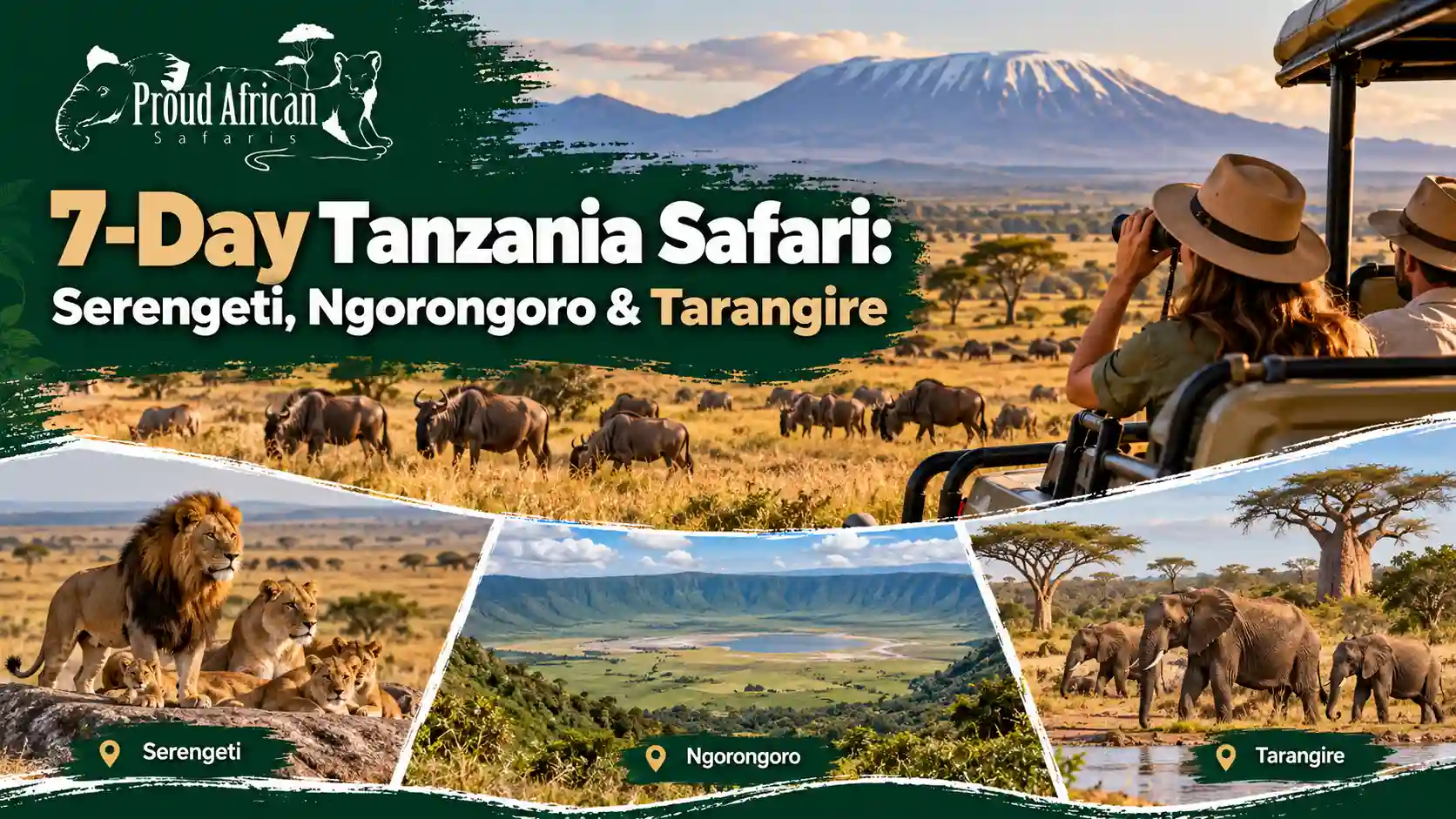
Quick answer: A 7-day Tanzania safari (7 days, 6 nights) covers Tarangire National Park, the Serengeti and Ngorongoro Crater on the classic northern circuit: one full day in Tarangire, two in the Serengeti and one in the crater, plus arrival and departure days in Arusha. It suits first-time visitors, and June to October is the most popular dry-season window.
Tanzania safari for 7 days is a perfect choice for beginners to East African wildlife safaris, as it combines 3 famous destinations: Tarangire National Park, Serengeti National Park, and the Ngorongoro Crater.
Whether it is herds of elephants wandering under the old baobab trees or lions patrolling the plains of the Serengeti, this tour gives you a taste of a varied African safari in Tanzania without leaving your family for a month!
The crucial point here is timing. Six nights allow you to spend one full day at Tarangire, two days in Serengeti, and one day on a game drive in Ngorongoro Crater. The following itinerary will be useful in the process of choosing your Tanzania safari packages, of course, depending on the season.
Key Facts: 7 Days, 6 Nights
| Detail | Overview |
|---|---|
| Duration | 7 days, 6 nights |
| Main destinations | Tarangire, Serengeti, Ngorongoro |
| Starting point | Arusha or Kilimanjaro International Airport |
| Safari style | Private 4×4 with a dedicated guide |
| Accommodation | Lodges or tented camps, depending on budget |
| Wildlife highlights | Elephants, lions, giraffes, zebras, wildebeest and potentially the Big Five |
| Best time | Depends on wildlife priorities: June-October is popular for dry-season viewing |
| Optional extension | Zanzibar beach holiday or a Kilimanjaro trek |
⧭ The trip adheres to a traditional northern Tanzania circuit, which is common with safaris organized by Proud African Safaris. The exact trip and lodging arrangements will depend on your date of arrival, departure, and travel schedule.
Day-by-Day 7-Day Tanzania Safari Itinerary
In this section, we will take you through a marvelous day-by-day Tanzania safari itinerary.
Day 1: Arrive in Arusha
Arrive at Kilimanjaro International Airport and be driven to your Arusha hotel. Taking into consideration the time of your flight arrival, the first day should be relatively relaxed for recovery after a long journey and preparation for the upcoming safari.
The tour guide can brief you about the trip itinerary, discuss the wildlife you might be interested in, and arrange the departure for the next day.
Overnight: Arusha hotel.
Day 2: Tarangire National Park
After your morning meal, leave for Tarangire National Park, where you will spend the whole day game viewing. The park is famous for its large elephant herds, huge baobab trees, and abundant wildlife, especially around the Tarangire River in the dry season.
Your guide will look out for elephants, giraffes, zebras, wildebeest, antelopes, and other animals in the park. You will have a packed lunch in the middle of the day before continuing the game drive.
Tarangire is a great place for the first safari experience in Tanzania before moving on to the Serengeti.
Overnight: Lodge or tented camp in the Tarangire area.
Days 3-4: Serengeti National Park
Make your way to the Serengeti by passing through diverse landscapes as the road reveals extensive grasslands. In accordance with the chosen itinerary, animal observation may take place en route.
Spend two days at the national park in the company of your guide. The Serengeti is known for its predators, grassy plains, and Great Wildebeest Migration. Lions, cheetahs, elephants, giraffes, zebras, and herds of herbivores are among the many species that you might come across during the tour.
The locations of migration vary depending on the period, which is why your itinerary should be adjusted according to the dates. Two days will allow you to see more of the park.
Overnight: Serengeti lodge or tented camp for two exciting nights.
Day 5: Serengeti to Ngorongoro
Join the morning game drive activity, after which you proceed towards the Ngorongoro Conservation Area. The journey provides more chances to view wildlife and appreciate the transformation from the Serengeti Plains to the highlands.
This may be a long day of traveling based on your choice of campsite and the route. The campsite selected will take into consideration how far you have traveled and how close to the crater you will be the next day.
Enjoy the night at leisure, having dinner and getting ready for tomorrow’s activities.
Overnight: Lodge in the Ngorongoro highlands or Karatu area.
Day 6: Ngorongoro Crater Game Drive
Set out early for an exciting game drive in the Ngorongoro Crater, which is one of the most famous sites in Tanzania for wildlife viewing. Different habitat zones in the crater provide a home for zebras, wildebeests, buffaloes, elephants, hyenas, and lions, with an opportunity to see the rare black rhinoceros.
Your game drive will usually last for a number of hours and will depend on park rules, weather conditions, and animal behavior. An optional picnic lunch can be organized during the game drive.
On completion of the drive, drive back to the lodge and spend the evening at leisure in the highlands.
Overnight: Ngorongoro highlands or Karatu area.
Day 7: Return to Arusha and Departure
Return to Arusha or go straight to Kilimanjaro International Airport according to your flight schedule following breakfast.
Be prepared for any delays on the road or at the airport. If you are departing at an earlier hour, staying at a hotel near the airport overnight might be more convenient.
For those with extra days to stay, this is a good chance to visit Zanzibar.
How the 7-Day Route Changes by Season
The route is mostly the same for the entire year, but the section of Serengeti needs to take into account the movement of wildlife due to seasonality.
➠ January-March: Consider southern Serengeti and Ndutu area for wildebeest birthing season depending on the rains.
➠ April-May: Greener pastures, but expect rains and may experience some road changes.
➠ June-October: Drier climate makes sighting of wildlife easy, especially at the watering holes in Tarangire National Park.
➠ July-September: Consider the northern part of the Serengeti if sighting potential river crossings of animals is what you want to see. Crossings are not always predictable.
Flexible route planning is better than fixing a route according to the date of migration. For a month-by-month breakdown, see our guide to the best time to go on safari in Tanzania.
Drive or Fly Between Parks?
A road safari involves an uninterrupted safari around Tanzania’s landscapes and gives an opportunity to view the game through appropriate roads. The road safari can also be cheaper since you will be traveling using a personal car throughout the safari.
Using an airplane to get to and from the Serengeti from Arusha means saving on time spent driving and having extra time to view the wildlife; however, there are the expenses incurred in flying, luggage limitations, and transfers at airports. A fly-in safari would be more appealing to tourists interested in comfort.
Consider whichever approach is better for you for a seven-day tour.
What You’ll See, Park by Park
| Park | Signature Experience |
|---|---|
| Tarangire | Elephants, baobabs, and seasonal river activity |
| Serengeti | Lions, cheetahs, plains, wildlife, and migration herds |
| Ngorongoro | Diverse wildlife within a dramatic volcanic caldera |
Sighting animals is not guaranteed at all. The value of a knowledgeable guide is in understanding animal behaviour, choosing productive routes, and adapting the day to current situations.
Short on Time? The 6-Day Version
A 6-day Tanzania safari will still allow for Tarangire, Serengeti, and Ngorongoro but with tight scheduling. One option is to cut the Serengeti stay from two nights to one while keeping the crater day.
If you opt for the above Tanzania safari itinerary, the tip to remember is that you can either fly in or out of the Serengeti in order to save safari time. Never plan for long drives before the international flight. When migration viewing is your main priority, keeping the extra day is often worthwhile.
7 Days vs 5 Days vs 10 Days
| Duration | What Works Best |
|---|---|
| 5 days | A compact northern circuit, potentially with limited time in the Serengeti |
| 7 days | Tarangire, two Serengeti days, and Ngorongoro |
| 10 days | More Serengeti time, a slower pace, or a Zanzibar extension |
Seven days is a good compromise for a first-time visitor. Five days are better for travelers who have very little vacation time, while ten days, like our 10-day Great Migration safari, offer greater flexibility concerning the movement of the wildlife.
Is 7 Days Enough for a Tanzania Safari?
Yes. Seven days are sufficient to have a good introduction to the northern circuit of Tanzania’s safaris, especially when concentrating on three destinations instead of many far-off national parks.
Seven days are not sufficient to see all the parts of Tanzania leisurely. If you need more time for Serengeti, hiking Mount Kilimanjaro, or spending some days on Zanzibar, you can prolong your holiday.
What’s Included
The specific inclusions depend on the operator and type of accommodation booked. The usual inclusions for a private safari holiday package include:
- Airport transfers mentioned in the itinerary.
- Accommodation for six nights.
- Private 4×4 safari vehicle and guide.
- Game drives scheduled.
- Meals as mentioned in the itinerary.
- Conservation and park fees where applicable.
International airfares, visas, insurance, tips, drinks and optional activities may incur additional costs. Always ask for a written quote to know what is included and not included.
Add Zanzibar or Kilimanjaro
↪ Zanzibar: Consider adding two to four nights for beach, Stone Town, spice plantation visits, and water-based activities. This is the easier option for tourists who would like to unwind after a few days of game drives.
↪ Kilimanjaro: Climbing the mountain summit is another activity that requires more preparation and takes longer than a normal safari. It is generally planned smartly as the main purpose of a longer trip rather than squeezed into a seven-day safari.
Request Your 7-Day Itinerary
All have their own set of preferences. There are some who would like the Great Migration, while others would go for elephants, photo safaris, family-oriented accommodations, or luxury camps.
At Proud African Safaris, we will help you organize a private northern Tanzania safari route, depending on your availability, accommodation choices, and wildlife preferences. First, start with the basic seven days and then arrange the Serengeti location according to the season. Our guide will help you design the best African safari Tanzania, a tour you will cherish for a long time.
Explore private custom safaris or visit the Tanzania safari specialists page to initiate planning.
What is the best month for a seven-day Tanzania safari?
No specific time works best for all travelers. Dry season viewing is between June and October, while calving in the southern part of Serengeti is ideal during January to March. Choose a path according to your animal preferences and schedule.
How much does a seven-day Tanzania safari cost?
Rates depend on season, group size, accommodation, transportation, and entrance fees. Luxury campsites and flying safaris tend to be more expensive than cheaper tented camps and road safaris. Ensure you get an itemized quotation before you compare safari packages.
Can I see the Big Five in seven days?
It is indeed possible for a seven-day safari in the north circuit to offer visitors sightings of lions, leopards, elephants, buffaloes and rhinos. This is especially true if one spends some time in the Serengeti and Ngorongoro regions. But then again, it depends on chance.
Can I add Zanzibar to my seven-day safari?
You certainly can, but you will have a very tight schedule. In order to experience both the wildlife and the beaches properly, you should add a couple of days to your holiday schedule so that the time spent traveling is not overwhelming.