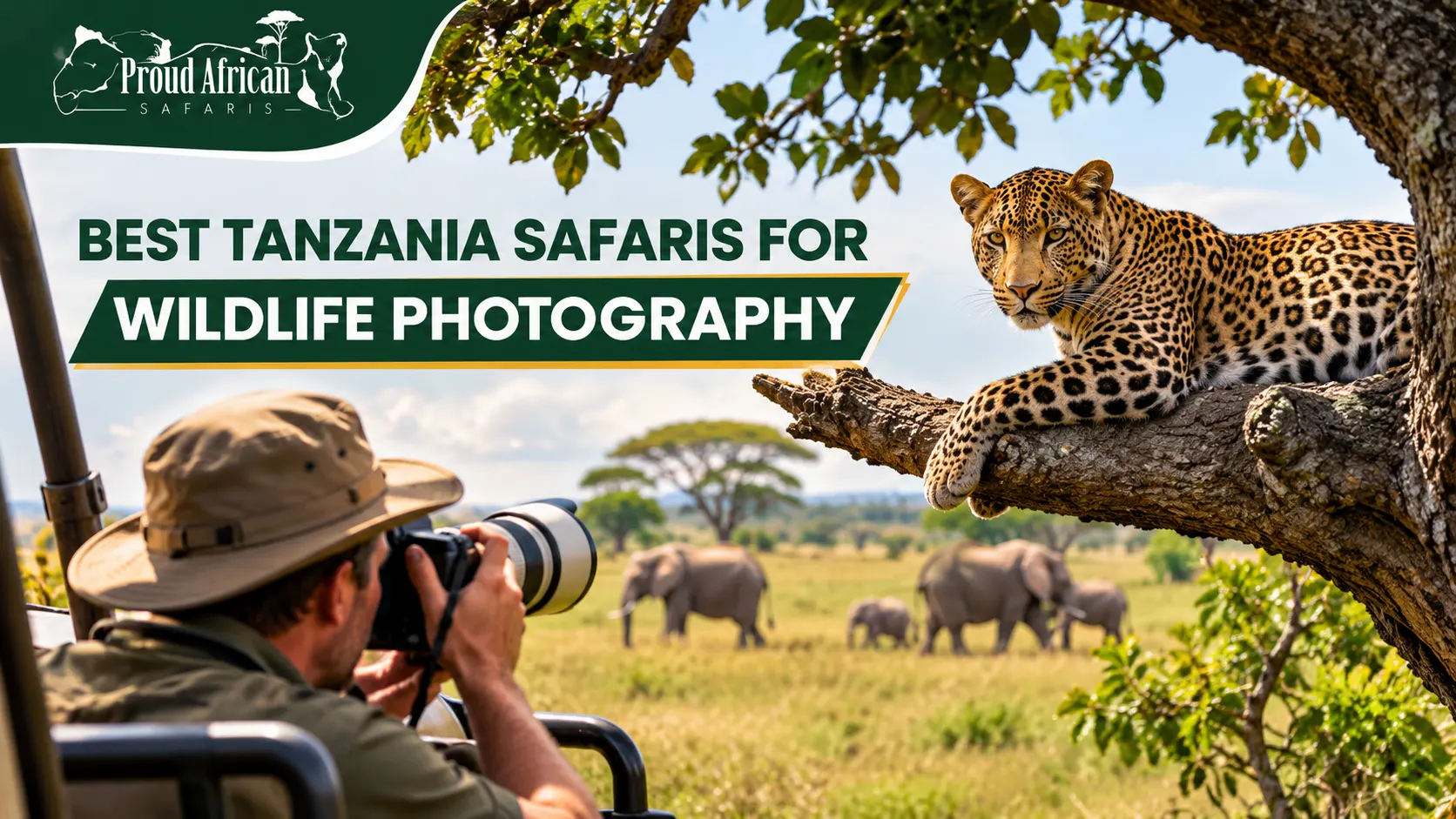
Imagine visiting Serengeti National Park. Dawn breaks over the Serengeti. A lioness lifts her head from the tall grass. Golden light falls across her face, and you have around three seconds to get the shot.
Wildlife moments like this are why photographers keep coming back to Tanzania. Few places on Earth give you this much wildlife, this much space, and this much natural light.
If you’re planning a trip, choose from our Tanzania safari packages. This guide covers the best places to go, when to visit, and how to come home with images you’ll be proud of.
Why Tanzania Is a Photographer’s Dream
Tanzania is home to some of Africa’s most renowned national parks. Many of them sit close together in the north so that you can see diverse landscapes on one tour.
Here’s what makes it special:
- Huge number of wild animals: Millions of wildebeest, zebras, and gazelles move through the Serengeti each year.
- Big cats everywhere: Lions, leopards, and cheetahs are frequently seen.
- Varied landscapes: Open plains, volcanic craters, baobab trees, and soda lakes.
- Natural light: Clear mornings and golden afternoons are perfect for photos.
An African safari Tanzania in Tanzania gives you more variety than most photographers expect. One day you’re shooting a river crossing; the next day, you’re photographing flamingos on a pink lake.
The Best Tanzania Safaris for Wildlife Photography
- Serengeti National Park: The Main Event
The Serengeti is the star of the show, and it deserves the hype.
The Great Migration is the big draw. Around 1.5 million wildebeest move in a giant loop across the ecosystem. From July to October, the herds reach the Mara River in the north. This is when you can catch the dramatic river crossings, with crocodiles waiting in the water to catch their prey.
The central Serengeti, around Seronera, is known for big cats. Leopards rest in the sausage trees, and lion prides lounge on the kopjes (rocky outcrops).
Photo tip: Shoot river crossings at a fast shutter speed (1/2000s or faster). Then try a slow pan at 1/30s to capture motion.
- Ndutu: Calving Season Magic
Ndutu sits in the southern Serengeti, inside the Ngorongoro Conservation Area. From January to March, it becomes the center for calving season.
Thousands of wildebeest calves are born here during the peak weeks. Where there are newborns, there are predators. Cheetahs, lions, and hyenas are very active.
Off-road driving is allowed in parts of Ndutu. This means your guide can get you closer to the action and into better angles. For photographers, that makes a huge difference.
Photo tip: Look for tender moments like a mother licking her newborn calf. These quiet shots often tell the best stories.
- Ngorongoro Crater: Wildlife in the Crater
The Ngorongoro Crater is an unbroken volcanic caldera, around 600 meters deep. Its floor is packed with wildlife.
This is one of the best places in Tanzania to spot the endangered black rhino. You’ll also see lions, elephants, buffalo, hippos, and flamingos, all in one day. The crater walls make a stunning backdrop. Morning mist rolling over the rim is a beautiful scene to capture.
Photo tip: Arrive as soon as the gates open. You’ll get softer light and fewer vehicles in your frame.
- Tarangire National Park: Land of Giants
Tarangire is often underrated, and that’s a mistake. During the dry season (June to October), it has one of the largest elephant groups in northern Tanzania. The park is also famous for its ancient baobab trees. An elephant walking past a giant baobab at sunset is a classic African shot. It’s quieter than the Serengeti. That means more time with animals and less competition for the best spot.
Photo tip: Use a wide-angle lens to show elephants in their landscape. Not every shot has to be a close-up.
- Lake Manyara National Park: Flamingos and Tree-Climbing Lions
Lake Manyara is full of surprises. It’s known for its tree-climbing lions, though sightings aren’t guaranteed. Bird photographers will explore over 400 bird species in the park. Pink flamingos, pelicans and storks gather along the lake shore. The mix of forest, lake and cliffs creates lots of variety in a short drive.
Photo tip: Bring a long lens (400mm or more) for birds. A beanbag on the vehicle window keeps your camera steady.
- Ruaha National Park: Wild and Remote
Want to get away from the crowds? Head south to Ruaha. It’s one of Tanzania’s largest parks, and it gets far fewer visitors than the north. Ruaha is known for big lion prides. You might also spot wild dogs, kudu, and sable antelope, which are rare in the northern parks. The rugged landscape and the Great Ruaha River give your photos a raw, untouched feel.
Photo tip: The dry season (June to October) brings animals to the river. Park near water sources and wait. Patience pays off here.
- Nyerere National Park: Safari by Boat
Nyerere, once part of the Selous Game Reserve, is the largest NP in Tanzania. Here you can go on a boat safari along the Rufiji River. Shooting from the water gives you eye-level views of hippos, crocodiles, and birds. Elephants often come down to drink at the riverbanks. Walking safaris are also possible, which lets you photograph the smaller details of the bush.
Photo tip: Shoot low from the boat. Eye-level angles make your wildlife photos feel more personal and powerful.
When Is the Best Time to Go?
There’s no bad time to visit Tanzania. It just depends on what you want to shoot.
- January to March: Calving season in Ndutu. Predators seen.
- April to May: Long rains. Green landscapes, dramatic skies, and fewer tourists.
- June to October: Dry season. Easy game viewing and river crossings in the northern Serengeti.
- November to December: Short rains. Fresh greenery and the herds moving south.
If it’s your first trip, the dry season is the easiest. Animals gather near water, and the grass is shorter, so they’re easier to see.
Camera Gear to Pack
You don’t need a bag full of expensive gear. But a few items will help a lot:
- A telephoto lens (100–400mm or 200–600mm) for wildlife.
- A wide-angle lens for landscapes and big skies.
- Two camera bodies, if you have them. Swapping lenses in dusty conditions is risky.
- Plenty of memory cards and batteries. You’ll shoot more than you think.
- A beanbag for support on the vehicle.
- A dust cover or blower to keep your sensor clean.
Keep your gear simple. The best camera is the one you know well.
How to Choose the Right Safari
Not all safaris are built for photographers. Here’s what to look for when comparing Tanzania safari packages:
- Pop-up roof vehicles: These give you a 360-degree view and room to shoot.
- Small groups: Fewer people means more space and better angles.
- Flexible timing: You want to stay with a sighting as long as it takes.
- Experienced guides: A good guide knows animal behavior and where the light will fall.
- Early starts and late finishes: The best light is at sunrise and sunset.
A private safari is often the best choice. You set the pace, and you won’t have to leave a leopard just because someone else is bored.
A Few Etiquette Tips
Great photos should never come at the cost of the animals. Keep these in mind:
- Never ask your guide to get too close or block an animal’s path.
- Stay quiet during game drives.
- Don’t use flash on wildlife.
- Follow park rules on off-road driving.
Respect for wildlife makes for better photos, too. Calm animals act naturally.
Plan Your Photography Safari With Proud African Safaris
Tanzania gives photographers drama, diversity, and some of the best wildlife viewing in the world. From the river crossings of the Serengeti to the quiet baobabs of Tarangire, every park tells a different story.
At Proud African Safaris, we build itineraries around what matters to you. Our Tanzania safari packages are tailored for photographers, with flexible schedules, pop-up roof vehicles, and guides who know how to find the shot.
Ready to plan your African safari in Tanzania? Get in touch with our team today, and let’s start planning the photo trip of a lifetime.