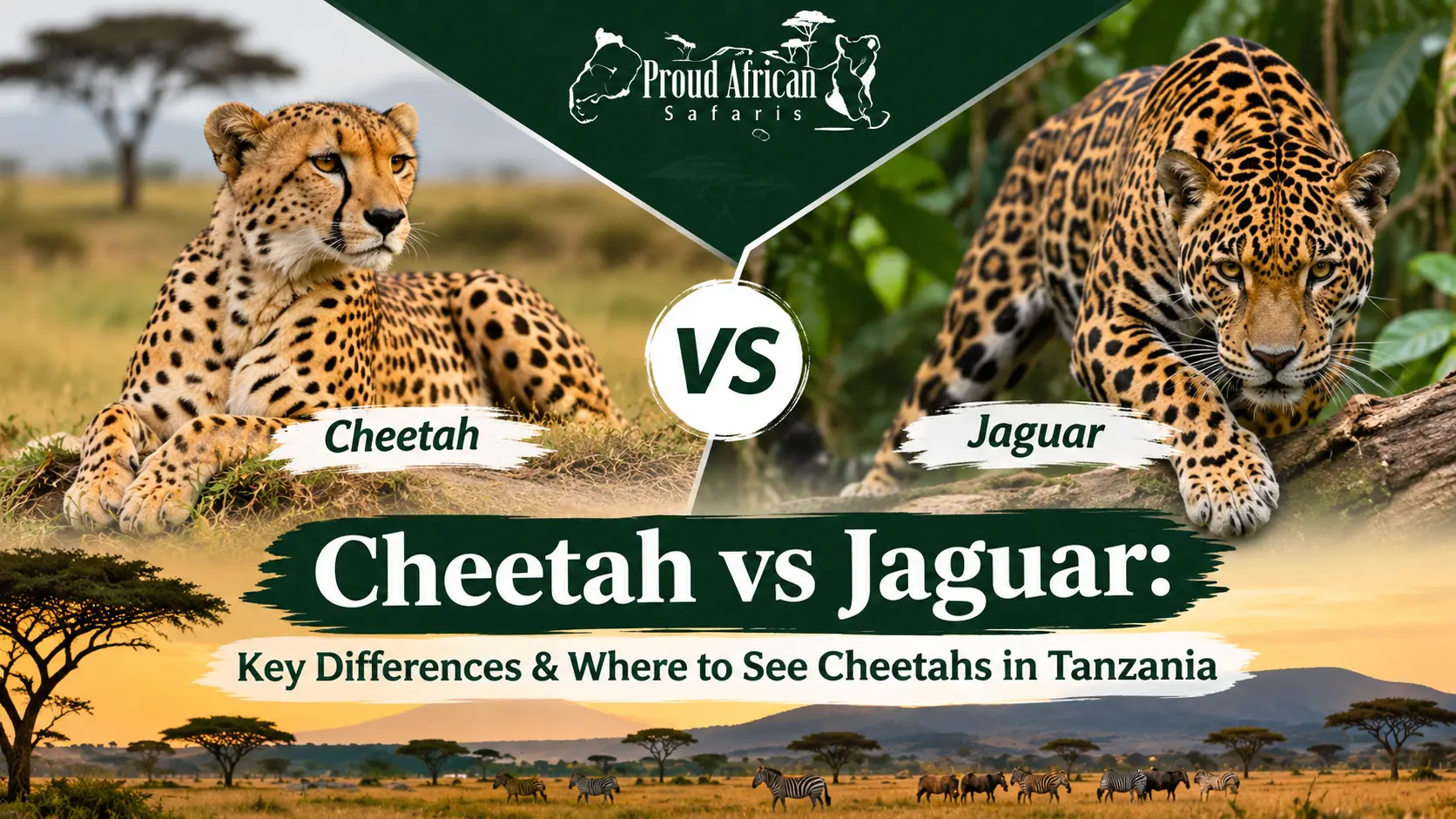
Cheetahs and jaguars are excellent predators. To some, they may look similar because of their spots. Yet they differ by miles in appearance, behaviour, habitat, and hunting style. This is what every safari traveller should know. Jaguars are not native to Africa. You can see them in Central and South America, while cheetahs roam parts of Africa, including Tanzania.
If you are planning a wildlife safari Tanzania, knowing these differences can make your safari tour more interesting and your game drives even more exciting. Let’s look at what features separate these two big cats and where you can see cheetahs in the wild.
Cheetah and Jaguar at a Glance: What Sets Them Apart?
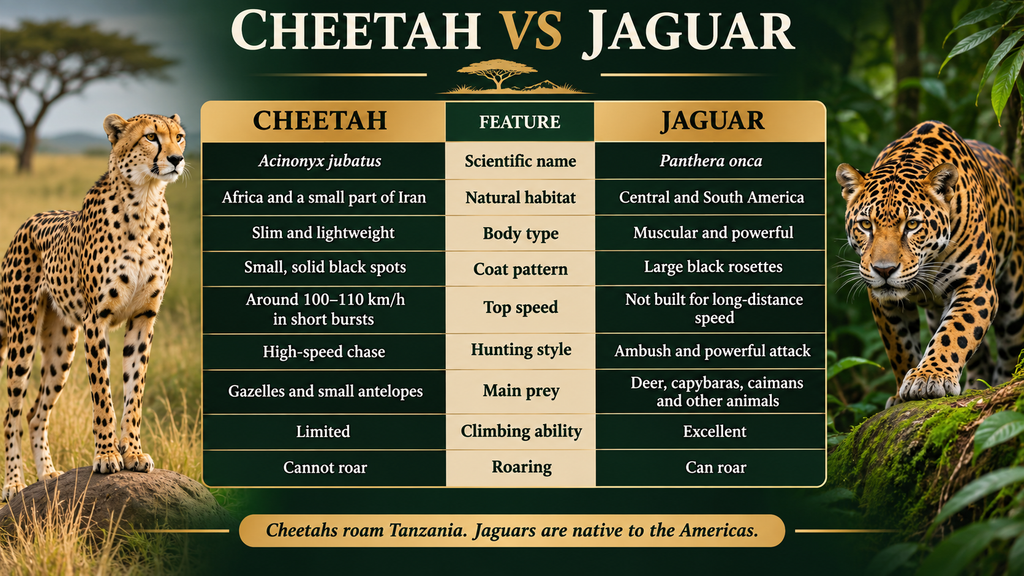
The table below presents the clear differences between cheetahs and jaguars for safari travelers. This will help you better understand the distinctions between the two wild animals.
Noticing the Coat: How to Recognise Each Big Cat?
The easiest way to differentiate a cheetah from a jaguar is by looking at its coat.
Cheetahs have small, solid black spots across their golden-yellow bodies. The spots are separate and do not form rings. They have tear marks running from the inner corners of their eyes down towards their mouths.
Jaguars have large, dark rosette-shaped markings on their coats. Most rosettes contain smaller black spots inside them. Jaguars are much heavier, with broad heads, strong jaws, and muscular legs.
Different Build: Comparing Size and Strength
Cheetahs have incredible speed because of their long legs, flexible spine, deep chest, and lightweight bodies. They use their long tail to stay balanced and turn while hunting.
Jaguars are heavier and stronger. They have thick necks, powerful shoulders, and one of the strongest bites in the big cat family compared to their size.
Cheetahs weigh around 35 – 65 kg, while adult jaguars commonly weigh between 45 and 100 kg. Weight varies by the animal’s size.
Different Ways to Catch Prey
Cheetahs have incredible speed. They can reach approximately 100–110 km/h during short sprints, though they cannot maintain this speed for long. Cheetahs usually hunt during daylight. Their common prey includes Thomson’s gazelles, impalas, and other small antelopes. A cheetah tiptoes to its target before making a sudden sprint.
Jaguars follow a different method. They prefer to stay hidden and wait for the right moment to pounce. Their powerful jaws help them deliver a strong bite to their prey.
Where the Big Cats Roam in the Wild
Cheetahs roam around grasslands, savannahs, and lightly wooded areas. The landscapes give them enough space to spot and chase their prey.
They are found in African countries, including Tanzania, Namibia, Botswana, and Kenya. A small population of Asiatic cheetahs survives in Iran.
Jaguars live in tropical rainforests, wetlands, and rivers. Their natural range stretches across parts of Central and South America, with the Amazon rainforest being one of their primary habitats.
A Closer Look at Their Daily Activities
Cheetahs are social. Female cheetahs usually live alone, except when raising their cubs. Male cheetahs form small coalitions with their brothers. They are generally active during the day. You may see them resting on termite mounds, scanning the grasslands, or watching herds of antelope.
Jaguars are mostly solitary animals. They prefer to hunt alone and defend their territories. They are often active at night, though you can also see them during the day.
Top Destinations in Tanzania for Cheetah Encounters
Tanzania is one of Africa’s best destinations for cheetah viewing. Open grasslands, abundant prey, and protected wildlife areas provide ideal conditions for these fast hunters.
Serengeti National Park
The Serengeti is one of the best places in Tanzania to see cheetahs. Its wide-open plains provide the perfect landscape for their hunting style.
The southern and southeastern plains are particularly interesting for cheetah sightings. You may spot them standing on termite mounds, resting in the grass, or following a herd of gazelles.
The central Serengeti, especially the Seronera area and nearby open plains, is another good place to look.
A private game drive under an expert guide can help you explore different areas based on recent wildlife sightings.
Ndutu National Park
Ndutu is located in the southern Serengeti ecosystem, close to the Ngorongoro Conservation Area. It is especially popular during the wildebeest calving season.
Between January and March, large numbers of wildebeest gather here to give birth. This attracts predators, including cheetahs.
You can easily spot animals through the small grass across the plains. You may also see cheetahs watching herds or preparing to hunt.
Ndutu is an excellent choice for travellers interested in predator activity and wildlife photography.
Wildlife-Rich Ngorongoro Conservation Area
The Ngorongoro Conservation Area offers a different safari landscape for an adventurous wildlife safari Tanzania. It includes open grasslands, woodland areas, volcanic scenery, and the famous Ngorongoro Crater.
Cheetah sightings are less predictable here than in the open Serengeti plains. However, the surrounding conservation area and nearby grasslands can offer opportunities to see them.
It is worth including Ngorongoro in a longer itinerary if you want to experience different landscapes and wildlife habitats.
Which is the Ideal Season to Spot Cheetahs
The dry season, from June to October, is the most preferable time for wildlife viewing in Tanzania. Shorter grass and better visibility can make it easier to spot animals.
However, January to March is also an excellent period for cheetah viewing around Ndutu. The wildebeest calving season brings large herds and attracts predators.
You can never guarantee spotting cheetahs in the national parks. Their movements depend on prey, weather, and natural conditions.
A Few Safari Tips Can Make a Big Difference
A little caution can make your wildlife experience more rewarding.
- Choose an experienced safari guide who understands cheetah behaviour.
- Carry binoculars to watch animals across open plains.
- Look around termite mounds and elevated areas.
- Plan early-morning or late-afternoon game drives.
- Maintain distance. Avoid disturbing animals during a hunt.
- Be patient, as wildlife viewing often requires time.
A good guide can help you understand animal movements and identify details that you might otherwise miss.
Experience Tanzania Safari Happen with Us
Watching a cheetah amidst the forests and savannas is a special experience. Watching it scan the plains, move quietly through the grass, or chase an antelope is something that stays with you long after the journey ends.
Proud African Safaris offers personalised Tanzania safari experiences with private 4×4 game drives and experienced local guides. Whether you want to explore the Serengeti, visit Ndutu during calving season, or combine several national parks, we can plan your itinerary around your interests.
Explore our Tanzania travel packages and discover the wildlife, landscapes, and culture that make Tanzania such a remarkable destination.
From luxury safaris to private custom journeys, we can help you plan an adventure that matches your travel style. If spotting cheetahs is on your wish list, let us help you choose the right destinations and travel season.
Where are cheetahs most commonly seen in Tanzania?
The Serengeti National Park is one of the best places to see cheetahs. The southern and southeastern plains, central Serengeti, and Ndutu region are preferred areas to explore.
What is the best month to see cheetahs in Tanzania?
January to March is a great time to visit Ndutu during the wildebeest calving season. June to October also offers excellent wildlife-viewing conditions across the Serengeti.
Are cheetahs dangerous to safari visitors?
Cheetahs are wild predators, but they usually don’t approach humans. During game drives, visitors must remain inside the safari vehicle unless their guide gives specific instructions.